A display list, also called a command list in Direct3D 12 and a command buffer in Vulkan, is a series of graphics commands or instructions that are run when the list is executed. Systems that make use of display list functionality are called retained mode systems, while systems that do not are as opposed to immediate mode systems. In OpenGL, display lists are useful to redraw the same geometry or apply a set of state changes multiple times. This benefit is also used with Direct3D 12's bundle command lists. In Direct3D 12 and Vulkan, display lists are regularly used for per-frame recording and execution. == Origins in vector displays == The vector monitors or calligraphic displays of the 1960s and 1970s used electron beam deflection to draw line segments, points, and sometimes curves directly on a CRT screen. Because the image would immediately fade, it needed to be redrawn many times a second (storage tube CRTs retained the image until blanked, but they were unsuitable for interactive graphics). To refresh the display, a dedicated CPU called a Display Processor or Display Processing Unit (DPU) was used, which had a memory buffer for a "display list", "display file", or "display program" containing line segment coordinates and other information. Advanced Display Processors also supported control flow instructions, which were useful for drawing repetitive graphics such as text, and some could perform coordinate transformations such as 3D projection. == Home computer display list functionality == One of the earliest systems with a true display list was the Atari 8-bit computers. The display list (actually called so in Atari terminology) is a series of instructions for ANTIC, the video co-processor used in these machines. This program, stored in the computer's memory and executed by ANTIC in real-time, can specify blank lines, any of six text modes and eight graphics modes, which sections of the screen can be horizontally or vertically fine-scrolled, and trigger Display List Interrupts (called raster interrupts or HBI on other systems). The Amstrad PCW family contains a Display List function called the 'Roller RAM'. This is a 512-byte RAM area consisting of 256 16-bit pointers in RAM, one for each line of the 720 × 256 pixel display. Each pointer identifies the location of 90 bytes of monochrome pixels that hold the line's 720 pixel states. The 90 bytes of 8 pixel states are spaced at 8-byte intervals, so there are 7 unused bytes between each byte of pixel data. This suits how the text-orientated PCW constructs a typical screen buffer in RAM, where the first character's 8 rows are stored in the first 8 bytes, the second character's rows in the next 8 bytes, and so on. The Roller RAM was implemented to speed up display scrolling as it would have been unacceptably slow for its 3.4 MHz Z80 to move up the 23 KB display buffer 'by hand' i.e. in software. The Roller RAM starting entry used at the beginning of a screen refresh is controlled by a Z80-writable I/O register. Therefore, the screen can be scrolled simply by changing this I/O register. Another system using a Display List-like feature in hardware is the Amiga, which, not coincidentally, was also designed by some of the same people who developed the custom hardware for the Atari 8-bit computers. Once directed to produce a display mode, it would continue to do so automatically for every following scan line. The computer also included a dedicated co-processor, called "Copper", which ran a simple program or 'Copper List' intended for modifying hardware registers in sync with the display. The Copper List instructions could direct the Copper to wait for the display to reach a specific position on the screen, and then change the contents of hardware registers. In effect, it was a processor dedicated to servicing raster interrupts. The Copper was used by Workbench to mix multiple display modes (multiple resolutions and color palettes on the monitor at the same time), and by numerous programs to create rainbow and gradient effects on the screen. The Amiga Copper was also capable of reconfiguring the sprite engine mid-frame, with only one scanline of delay. This allowed the Amiga to draw more than its 8 hardware sprites, so long as the additional sprites did not share scanlines (or the one scanline gap) with more than 7 other sprites. i.e., so long as at least one sprite had finished drawing, another sprite could be added below it on the screen. Additionally, the later 32-bit AGA chipset allowed the drawing of bigger sprites (more pixels per row) while retaining the same multiplexing. The Amiga also had dedicated block-shifter ("blitter") hardware, which could draw larger objects into a framebuffer. This was often used in place of, or in addition to, sprites. In more primitive systems, the results of a display list can be simulated, though at the cost of CPU-intensive writes to certain display modes, color control, or other visual effect registers in the video device, rather than a series of rendering commands executed by the device. Thus, one must create the displayed image using some other rendering process, either before or while the CPU-driven display generation executes. In many cases, the image is also modified or re-rendered between frames. The image is then displayed in various ways, depending on the exact way in which the CPU-driven display code is implemented. Examples of the results possible on these older machines requiring CPU-driven video include effects such as Commodore 64/128's FLI mode, or Rainbow Processing on the ZX Spectrum. == Usage in OpenGL == To delimit a display list, the glNewList and glEndList functions are used, and to execute the list, the glCallList function is used. Almost all rendering commands that occur between the function calls are stored in the display list. Commands that affect the client state are not stored in display lists. Display lists are named with an integer value, and creating a display list with the same name as one already created overrides the first. The glNewList function expects two arguments: an integer representing the name of the list, and an enumeration for the compilation mode. The two modes include GL_COMPILE_AND_EXECUTE, which compiles and immediately executes, and GL_COMPILE, which only compiles the list. Display lists enable the use of the retained mode rendering pattern, which is a system in which graphics commands are recorded (retained) to execute in succession at a later time. This is contrary to immediate mode, where graphics commands are immediately executed on client calls. == Usage in Direct3D 12 == Command lists are created using the ID3D12Device::CreateCommandList function. Command lists may be created in several types: direct, bundle, compute, copy, video decode, video process, and video encoding. Direct command lists specify that a command list the GPU can execute, and doesn't inherit any GPU state. Bundles, are best used for storing and executing small sets of commands any number of times. This is used differently than regular command lists, where commands stored in a command list are typically executed only once. Compute command lists are used for general computations, with a common use being calculating mipmaps. A copy command list is strictly for copying and the video decode and video process command lists are for video decoding and processing respectively. Upon creation, command lists are in the recording state. Command lists may be re-used by calling the ID3D12GraphicsCommandList::Reset function. After recording commands, the command list must be transitioned out of the recording state by calling ID3D12GraphicsCommandList::Close. The command list is then executed by calling ID3D12CommandQueue::ExecuteCommandLists.
Brain technology
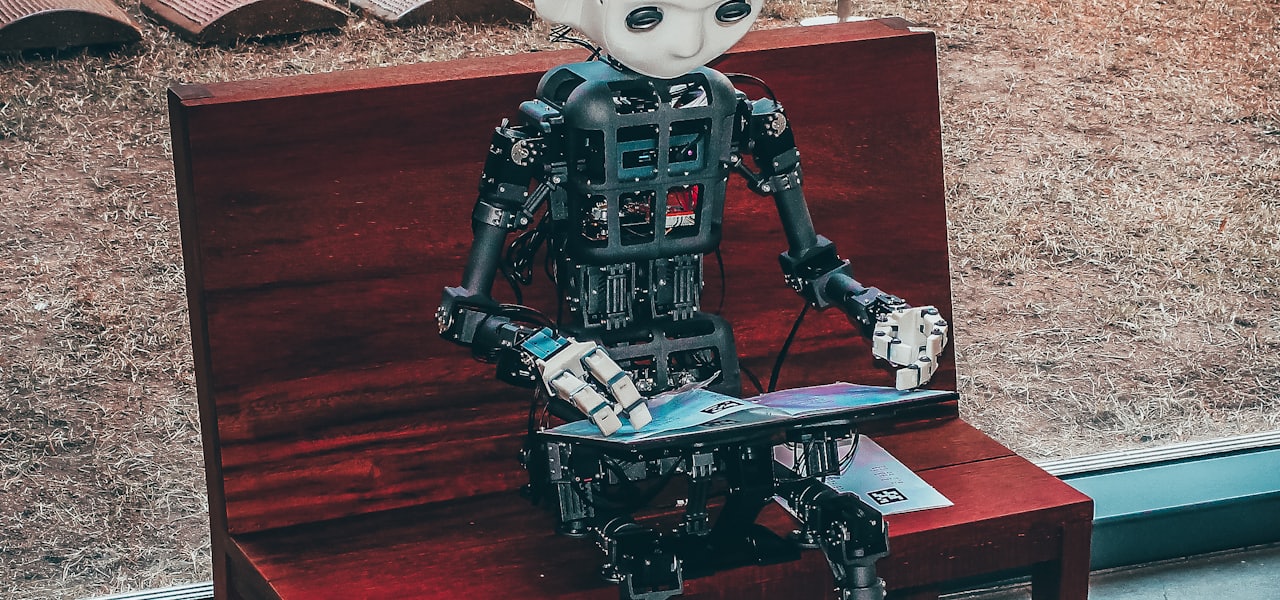
Brain technology, or self-learning know-how systems, defines a technology that employs latest findings in neuroscience. [see also neuro implants] The term was first introduced by the Artificial Intelligence Laboratory in Zurich, Switzerland, in the context of the Roboy project. Brain Technology can be employed in robots, know-how management systems and any other application with self-learning capabilities. In particular, Brain Technology applications allow the visualization of the underlying learning architecture often coined as "know-how maps". == Research and applications == The first demonstrations of BC in humans and animals took place in the 1960s when Grey Walter demonstrated use of non-invasively recorded encephalogram (EEG) signals from a human subject to control a slide projector (Graimann et al., 2010). Soon after Jacques J. Vidal coined the term brain–computer interface (BCI) in 1971, the Defense Advanced Research Projects Agency (DARPA) first starting funding brain–computer interface research and has since funded several brain–computer interface projects. That market is expected to reach a value of $1.72 billion by 2022. Brain–computer interfaces record brain activity, transmit the information out of the body, signal-process the data via algorithms, and convert them into command control signals. In 2012, a landmark study in Nature, led by pioneer Leigh Hochberg, MD, PhD, demonstrated that two people with tetraplegia were able to control robotic arms through thought when connected to the BrainGate neural interface system. The two participants were able to reach for and grasp objects in three-dimensional space, and one participant used the system to serve herself coffee for the first time since becoming paralyzed nearly 15 years prior. And in October 2020, two patients were able to wirelessly control an operating system to text, email, shop and bank using direct thought through the Stentrode brain computer interface (Journal of NeuroInterventional Surgery) in a study led by Thomas Oxley. This was the first time a brain–computer interface was implanted via the patient's blood vessels, eliminating the need for open brain surgery. Currently a number of groups are exploring a range of experimental devices using brain–computer interfaces, which have the potential to fundamentally change the way of life for patients with paralysis and a wide range of neurological disorders. These include: as Elon Musk, Facebook, and the University of California in San Francisco. The systems. This technology is also being explored as a neuromodulation device and may ultimately help diagnose and treat a range of brain pathologies, such as epilepsy and Parkinson's disease.
Rademacher complexity
In computational learning theory (machine learning and theory of computation), Rademacher complexity, named after Hans Rademacher, measures richness of a class of sets with respect to a probability distribution. The concept can also be extended to real valued functions. == Definitions == === Rademacher complexity of a set === Given a set A ⊆ R m {\displaystyle A\subseteq \mathbb {R} ^{m}} , the Rademacher complexity of A is defined as follows: Rad ( A ) := 1 m E σ [ sup a ∈ A ∑ i = 1 m σ i a i ] {\displaystyle \operatorname {Rad} (A):={\frac {1}{m}}\mathbb {E} _{\sigma }\left[\sup _{a\in A}\sum _{i=1}^{m}\sigma _{i}a_{i}\right]} where σ 1 , σ 2 , … , σ m {\displaystyle \sigma _{1},\sigma _{2},\dots ,\sigma _{m}} are independent random variables drawn from the Rademacher distribution i.e. Pr ( σ i = + 1 ) = Pr ( σ i = − 1 ) = 1 / 2 {\displaystyle \Pr(\sigma _{i}=+1)=\Pr(\sigma _{i}=-1)=1/2} for i ∈ { 1 , 2 , … , m } {\displaystyle i\in \{1,2,\dots ,m\}} , and a = ( a 1 , … , a m ) ∈ A {\displaystyle a=(a_{1},\ldots ,a_{m})\in A} . Some authors take the absolute value of the sum before taking the supremum, but if A {\displaystyle A} is symmetric this makes no difference. === Rademacher complexity of a function class === Let S = { z 1 , z 2 , … , z m } ⊆ Z {\displaystyle S=\{z_{1},z_{2},\dots ,z_{m}\}\subseteq Z} be a sample of points and consider a function class F {\displaystyle {\mathcal {F}}} of real-valued functions over Z {\displaystyle Z} . Then, the empirical Rademacher complexity of F {\displaystyle {\mathcal {F}}} given S {\displaystyle S} is defined as: Rad S ( F ) = 1 m E σ [ sup f ∈ F | ∑ i = 1 m σ i f ( z i ) | ] {\displaystyle \operatorname {Rad} _{S}({\mathcal {F}})={\frac {1}{m}}\mathbb {E} _{\sigma }\left[\sup _{f\in {\mathcal {F}}}\left|\sum _{i=1}^{m}\sigma _{i}f(z_{i})\right|\right]} This can also be written using the previous definition: Rad S ( F ) = Rad ( F ∘ S ) {\displaystyle \operatorname {Rad} _{S}({\mathcal {F}})=\operatorname {Rad} ({\mathcal {F}}\circ S)} where F ∘ S {\displaystyle {\mathcal {F}}\circ S} denotes function composition, i.e.: F ∘ S := { ( f ( z 1 ) , … , f ( z m ) ) ∣ f ∈ F } {\displaystyle {\mathcal {F}}\circ S:=\{(f(z_{1}),\ldots ,f(z_{m}))\mid f\in {\mathcal {F}}\}} The worst case empirical Rademacher complexity is Rad ¯ m ( F ) = sup S = { z 1 , … , z m } Rad S ( F ) {\displaystyle {\overline {\operatorname {Rad} }}_{m}({\mathcal {F}})=\sup _{S=\{z_{1},\dots ,z_{m}\}}\operatorname {Rad} _{S}({\mathcal {F}})} Let P {\displaystyle P} be a probability distribution over Z {\displaystyle Z} . The Rademacher complexity of the function class F {\displaystyle {\mathcal {F}}} with respect to P {\displaystyle P} for sample size m {\displaystyle m} is: Rad P , m ( F ) := E S ∼ P m [ Rad S ( F ) ] {\displaystyle \operatorname {Rad} _{P,m}({\mathcal {F}}):=\mathbb {E} _{S\sim P^{m}}\left[\operatorname {Rad} _{S}({\mathcal {F}})\right]} where the above expectation is taken over an identically independently distributed (i.i.d.) sample S = ( z 1 , z 2 , … , z m ) {\displaystyle S=(z_{1},z_{2},\dots ,z_{m})} generated according to P {\displaystyle P} . == Intuition == The Rademacher complexity is typically applied on a function class of models that are used for classification, with the goal of measuring their ability to classify points drawn from a probability space under arbitrary labellings. When the function class is rich enough, it contains functions that can appropriately adapt for each arrangement of labels, simulated by the random draw of σ i {\displaystyle \sigma _{i}} under the expectation, so that this quantity in the sum is maximized. The Rademacher complexity of a set A {\displaystyle A} can be rewritten as Rad ( A ) := 1 m E σ [ sup a ∈ A ∑ i = 1 m σ i a i ] = 1 m 2 m ∑ σ ∈ { − 1 / m , + 1 / m } m [ sup a ∈ A ⟨ σ , a ⟩ ] . {\displaystyle \operatorname {Rad} (A):={\frac {1}{m}}\mathbb {E} _{\sigma }\left[\sup _{a\in A}\sum _{i=1}^{m}\sigma _{i}a_{i}\right]={\frac {1}{{\sqrt {m}}2^{m}}}\sum _{\sigma \in \{-1/{\sqrt {m}},+1/{\sqrt {m}}\}^{m}}\left[\sup _{a\in A}\langle \sigma ,a\rangle \right].} Each term in the summation is the farthest distance of the set A {\displaystyle A} from the origin, along a unit-length direction σ {\displaystyle \sigma } . The directions are along the vertices of a hypercube. Thus, we can also write it as Rad ( A ) = 1 2 m 1 2 m − 1 ∑ σ ∈ { − 1 / m , + 1 / m } m / { − 1 , + 1 } [ sup a ∈ A ⟨ σ , a ⟩ − inf a ∈ A ⟨ σ , a ⟩ ] {\displaystyle \operatorname {Rad} (A)={\frac {1}{2{\sqrt {m}}}}{\frac {1}{2^{m-1}}}\sum _{\sigma \in \{-1/{\sqrt {m}},+1/{\sqrt {m}}\}^{m}/\{-1,+1\}}\left[\sup _{a\in A}\langle \sigma ,a\rangle -\inf _{a\in A}\langle \sigma ,a\rangle \right]} Here, the set { − 1 / m , + 1 / m } m / { − 1 , + 1 } {\displaystyle \{-1/{\sqrt {m}},+1/{\sqrt {m}}\}^{m}/\{-1,+1\}} denotes half of the vertices of a hypercube, selected so that each diagonal has exactly one vertex selected. In words, this states that 2 m Rad ( A ) {\displaystyle 2{\sqrt {m}}\operatorname {Rad} (A)} is precisely the average width of the set A {\displaystyle A} along all diagonal directions of a hypercube. == Examples == A singleton set has 0 width in any direction, so it has Rademacher complexity 0. The set A = { ( 1 , 1 ) , ( 1 , 2 ) } ⊆ R 2 {\displaystyle A=\{(1,1),(1,2)\}\subseteq \mathbb {R} ^{2}} has average width 1 / 2 {\displaystyle 1/{\sqrt {2}}} along the two diagonal directions of the square, so it has Rademacher complexity 1 / 4 {\displaystyle 1/4} . The unit cube [ 0 , 1 ] m {\displaystyle [0,1]^{m}} has constant width m {\displaystyle {\sqrt {m}}} along the diagonal directions, so it has Rademacher complexity 1 / 2 {\displaystyle 1/2} . Similarly, the unit cross-polytope { x ∈ R m : ‖ x ‖ 1 ≤ 1 } {\displaystyle \{x\in \mathbb {R} ^{m}:\|x\|_{1}\leq 1\}} has constant width 2 / m {\displaystyle 2/{\sqrt {m}}} along the diagonal directions, so it has Rademacher complexity 1 / m {\displaystyle 1/m} . == Using the Rademacher complexity == The Rademacher complexity can be used to derive data-dependent upper-bounds on the learnability of function classes. Intuitively, a function-class with smaller Rademacher complexity is easier to learn. === Bounding the representativeness === In machine learning, it is desired to have a training set that represents the true distribution of some sample data S {\displaystyle S} . This can be quantified using the notion of representativeness. Denote by P {\displaystyle P} the probability distribution from which the samples are drawn. Denote by H {\displaystyle H} the set of hypotheses (potential classifiers) and denote by F {\displaystyle {\mathcal {F}}} the corresponding set of error functions, i.e., for every hypothesis h ∈ H {\displaystyle h\in H} , there is a function f h ∈ F {\displaystyle f_{h}\in F} , that maps each training sample (features,label) to the error of the classifier h {\displaystyle h} (note in this case hypothesis and classifier are used interchangeably). For example, in the case that h {\displaystyle h} represents a binary classifier, the error function is a 0–1 loss function, i.e. the error function f h {\displaystyle f_{h}} returns 0 if h {\displaystyle h} correctly classifies a sample and 1 else. We omit the index and write f {\displaystyle f} instead of f h {\displaystyle f_{h}} when the underlying hypothesis is irrelevant. Define: L P ( f ) := E z ∼ P [ f ( z ) ] {\displaystyle L_{P}(f):=\mathbb {E} _{z\sim P}[f(z)]} – the expected error of some error function f ∈ F {\displaystyle f\in {\mathcal {F}}} on the real distribution P {\displaystyle P} ; L S ( f ) := 1 m ∑ i = 1 m f ( z i ) {\displaystyle L_{S}(f):={1 \over m}\sum _{i=1}^{m}f(z_{i})} – the estimated error of some error function f ∈ F {\displaystyle f\in {\mathcal {F}}} on the sample S {\displaystyle S} . The representativeness of the sample S {\displaystyle S} , with respect to P {\displaystyle P} and F {\displaystyle {\mathcal {F}}} , is defined as: Rep P ( F , S ) := sup f ∈ F ( L P ( f ) − L S ( f ) ) {\displaystyle \operatorname {Rep} _{P}({\mathcal {F}},S):=\sup _{f\in F}(L_{P}(f)-L_{S}(f))} Smaller representativeness is better, since it provides a way to avoid overfitting: it means that the true error of a classifier is not much higher than its estimated error, and so selecting a classifier that has low estimated error will ensure that the true error is also low. Note however that the concept of representativeness is relative and hence can not be compared across distinct samples. The expected representativeness of a sample can be bounded above by the Rademacher complexity of the function class: If F {\displaystyle {\mathcal {F}}} is a set of functions with range within [ 0 , 1 ] {\displaystyle [0,1]} , then Rad P , m ( F ) − ln 2 2 m ≤ E S ∼ P m [ Rep P ( F , S ) ] ≤ 2 Rad P , m ( F ) {\displaystyle \operatorname {Rad} _{P,m}({\mathcal {F}})-{\sqrt {\frac {\ln 2}{2m}}}\leq \mathbb {E} _{S\sim P^{m}}[\operatorname {Rep} _{P}({\
Halite AI Programming Competition
Halite is an open-source computer programming contest developed by the hedge fund/tech firm Two Sigma in partnership with a team at Cornell Tech. Programmers can see the game environment and learn everything they need to know about the game. Participants are asked to build bots in whichever language they choose to compete on a two-dimensional virtual battle field. == History == Benjamin Spector and Michael Truell created the first Halite competition in 2016, before partnering with Two Sigma later that year. === Halite I === Halite I asked participants to conquer territory on a grid. It launched in November 2016 and ended in February 2017. Halite I attracted about 1,500 players. === Halite II === Halite II was similar to Halite I, but with a space-war theme. It ran from October 2017 until January 2018. The second installment of the competition attracted about 6,000 individual players from more than 100 countries. Among the participants were professors, physicists and NASA engineers, as well as high school and university students. === Halite III === Halite III launched in mid-October 2018. It ran from October 2018 to January 2019, with an ocean themed playing field. Players were asked to collect and manage Halite, an energy resource. By the end of the competition, Halite III included more than 4000 players and 460 organizations. === Halite IV === Halite IV was hosted by Kaggle, and launched in mid-June 2020.
Comparison of machine learning software
The following tables are a comparison of machine learning software such as software frameworks, libraries, and computer programs used for machine learning. == Machine learning software == == Other comparisons == == Machine learning helper libraries and platforms == Apache OpenNLP — natural language processing toolkit CUDA — GPU computing platform used to accelerate machine learning and deep learning workloads Horovod — distributed training framework for deep learning Hugging Face Transformers — library of pretrained transformer models built on other machine learning frameworks Kubeflow — machine learning platform for Kubernetes Mallet — toolkit for natural language processing and text analysis NumPy — numerical computing library used in machine learning OpenCV — computer vision library with machine learning functions ONNX — open format for representing machine learning models pandas — data analysis and data preparation library used in machine learning PlaidML — tensor compiler and backend for machine learning frameworks Polars — Dataframe library used for machine learning data preparation and analysis PyArrow — columnar data library used in machine learning data processing ROOT (TMVA) — data analysis framework with machine learning tools SciPy — scientific computing and optimization library used in machine learning == Online development environments for machine learning == Google Colab — hosted Jupyter Notebook environment commonly used for machine learning and deep learning JupyterLab — notebook-based development environment for machine learning and data science Jupyter Notebook — interactive notebook environment used for machine learning and data science Kaggle — online data science and machine learning platform
Syman
SYMAN is an artificial intelligence technology that uses data from social media profiles to identify trends in the job market. SYMAN is designed to organize actionable data for products and services including recruiting, human capital management, CRM, and marketing. SYMAN was developed with a $21 million series B financing round secured by Identified, which was led by VantagePoint Capital Partners and Capricorn Investment Group.
Dataset shift
Dataset shift is a phenomenon in machine learning and statistics in which the joint distribution of input variables and target labels is different in the training phase and the deployment or test phase (i.e., P t r a i n ( X , Y ) ≠ P t e s t ( X , Y ) {\displaystyle P_{train}(X,Y)\neq P_{test}(X,Y)} ). This happens when the statistical properties of data used to train a model are no longer representative of the data encountered in real-world use, often resulting in degraded predictive performance and diminished generalization ability. Dataset shift is a generic term for a number of particular types of distributional change. Covariate shift is when the distribution of the input features changes, but the conditional relationship between inputs and outputs remains constant . Prior probability shift (or label shift) happens when the distribution of target labels changes, but the conditional distribution of inputs given labels stays the same. Concept shift (also known as concept drift) is the change of the conditional relationship between inputs and outputs that renders previously learned patterns invalid over time. A key challenge for deploying machine learning systems is dataset shift, in particular in dynamic environments where the data distributions change over time. Detecting and mitigating such shifts is an active area of research, e.g., drift detection, domain adaptation, continual learning.